Proper planning is key to spring garden planting success
In my opinion, nothing is more enticing than walking through a garden center full of vibrantly colored spring flowers just calling my name. I admit to being the person who, in the not-too-distant past, would bring home several lovely specimens, only to place them in the part of the garden where plants go to die.
Sadly, while I was full of good intentions for my purchases, several factors led to their demise.
First and foremost was poor planning. While I had a general idea of what plants I wanted and where I intended to place them, I failed to prepare the area before bringing my purchases home. Then, due to time constraints, I delayed planting prep even further, leaving the poor seedlings to wither and die before I had their new home ready.
Lesson learned. I now know where I will place the newcomers and I prepare the area by weeding and amending the soil if needed before I venture to the nursery.
Variable weather would often lure me outdoors before it was a good time to plant. At the first hint of spring, I would head for the nursery and buy the perfect additions for my garden only to be confronted with several days of heavy rain or an early heat wave—neither situation ideal for giving transplants a good start.
Now I know to consult a long-range forecast—up to 10 days out—to determine a good time for planting. I look for a cool, overcast or cloudy day with light fog or mist, and I plant in the early afternoon. The extra dampness in the air can help prevent moisture loss and transplant shock.
Siting the plants in an appropriate part of the yard is critical. Study your garden over time to understand where its cooler and warmer zones are. Note the areas that get morning sun or afternoon shade. Then check the information on the plant label to match the plant to the right place.
Instead of randomly choosing plants when I arrive at the nursery, which is akin to grocery shopping without a meal plan or list, I do my research before I step foot in the nursery. I find the experience much more efficient and the results more rewarding.
Because I have slowly transitioned to more native plants to provide a food source for pollinators, I have found a few online resources especially helpful. The Xerces Society’s pollinator-friendly plant list for California Central Coast lists the blooming period, flower color, water needs and common name of 24 native plants (both annuals and perennials) suitable for our region. Another resource for choosing California native plants is Calscape, the website of the California Native Plant Society. The UC Davis Arboretum also has a website with 130 “All Stars” that are known to do well in California, as well as a list of other good plant choices for pollinators.
My goal for a recent weekend trip to a nursery was to add two or three native wildflowers to the perennial area of my garden. I currently have white and yellow monkeyflower, blue columbine, red penstemon, and red fuchsia in an area that has sun until late afternoon. I also wanted to put two or three plants with daisy-like flowers in a galvanized-steel planting container, and a low-growing groundcover or small shrub in an area with western exposure, with morning shade and full afternoon sun. My color choices were white and purple for the planter, lavender for the groundcover or low-growing shrubs, and lavender or purple for the wildflowers.
My shopping list included Ceanothus maritimus Valley Violet,’a UC Davis Arboretum All Star native flowering shrub. It grows about two feet tall and spreads to about four feet and has a lavender flower. For the groundcover I was hoping to find Ribes viburnifolium (evergreen currant), a California native that is low-growing and shade-tolerant. Unfortunately, I was unable to locate either of these plants, so I chose a lavender lantana native to South America. It is drought-tolerant and does well in full sun. I will continue to look for the groundcover and Ceanothus for planting later.
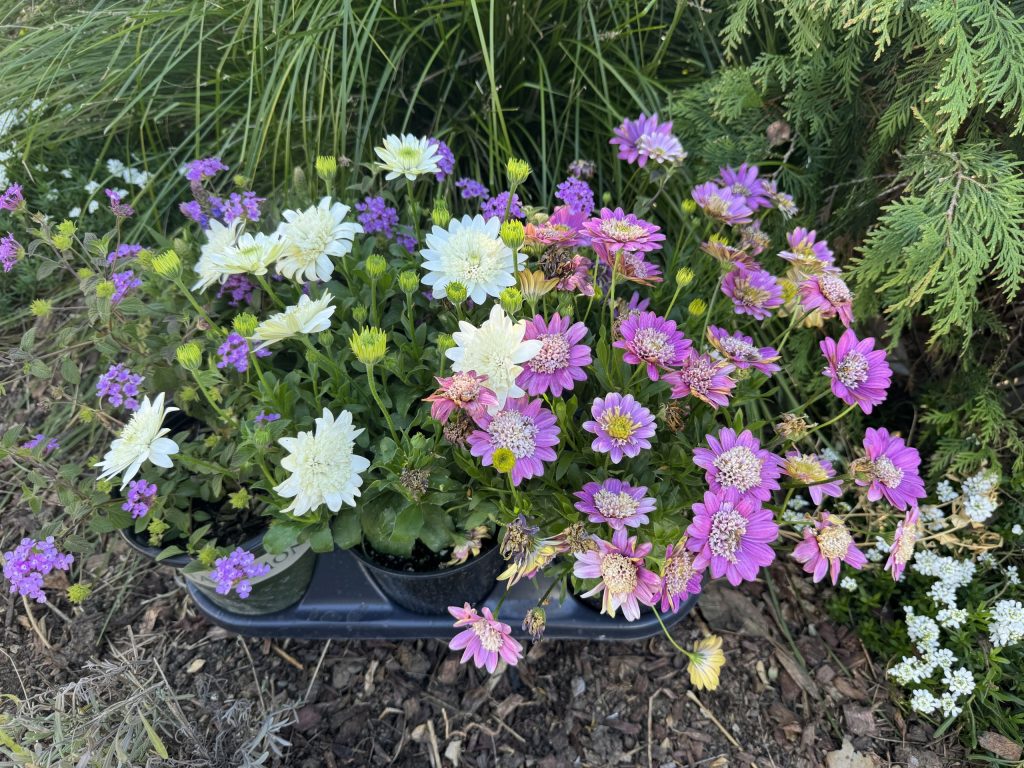
For the container, I was looking for Erigeron glaucus Wayne Roderick (seaside daisy), a heat-tolerant California hybrid attractive to pollinators. I couldn’t find it so replaced it with Osteospermum, commonly known as African daisy, with blossoms in lavender and white. While not native to California, it has naturalized in several areas in the state because it thrives in our Mediterranean climate. Note that while this plant is popular, it is also on the California Invasive Plant Council’s watch list as it is spreads freely. But it is short lived, with a 2 to 3-year life cycle. I will keep it in the container.
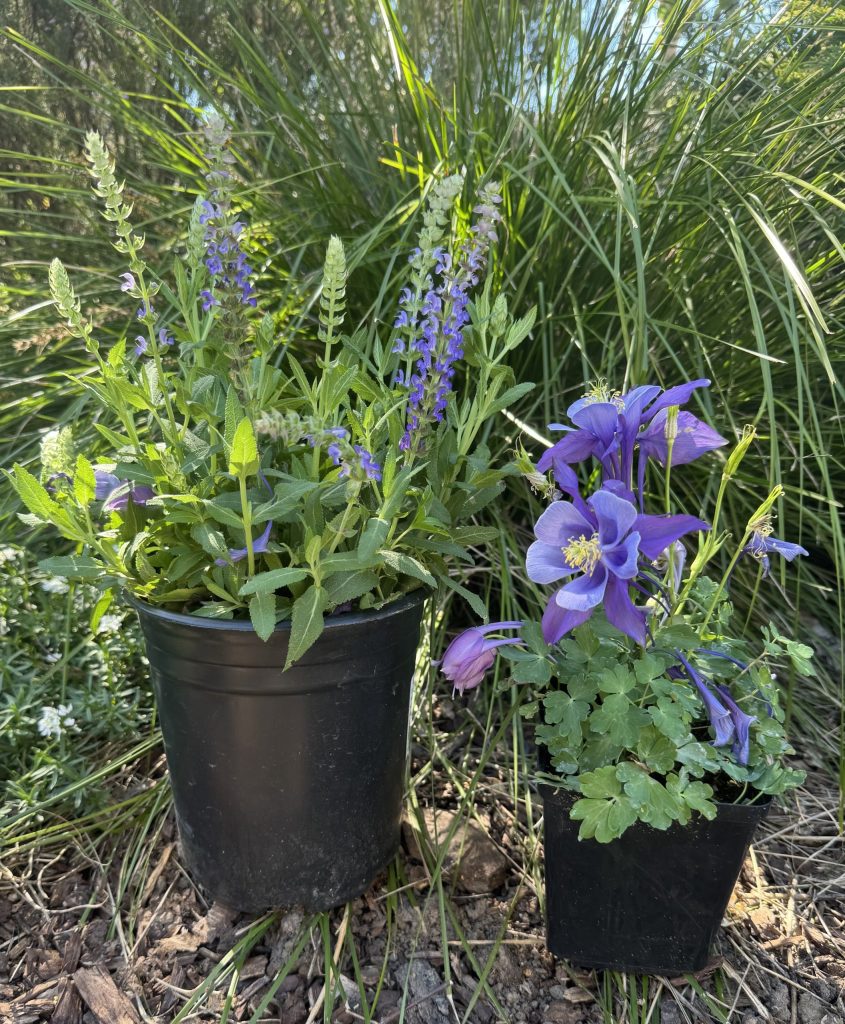
I was happy to locate both wildflowers I was looking for: the blue Colorado columbine and a blue Salvia nemorosa. With some planning, preparation and plant research on my part, the place in my garden where plants used to go to die no longer exists.
Tomato Plant Sale: Join UC Master Gardeners of Napa County for our annual tomato plant sale on Saturday, April 11, at 1710 Soscol Ave. in Napa, from 9 a.m. until sold out. Seedlings are $5 each; cash or check only. Download your shopping list here.
Workshop: Join UC Master Gardeners of Napa County for a workshop on “All About Growing Tomatoes” on Sunday, April 12, from 2 to 3 p.m., via Zoom. Learn about types of tomato plants and how to care for them, including soil and watering needs, staking, pest prevention and more. Register for the Zoom link.
Help Desk: The Master Gardener Help Desk is available to answer your garden questions. Use our online Plant Problem Help Form or email us at [email protected]. Include your name, address, phone number and a brief description of the problem. You can also visit us in person on Mondays and Fridays from 10 a.m. until 1 p.m. at the UC Cooperative Extension Office, 1710 Soscol Ave., Suite 4, Napa.