Pickett fire 90% contained; firefighters head home

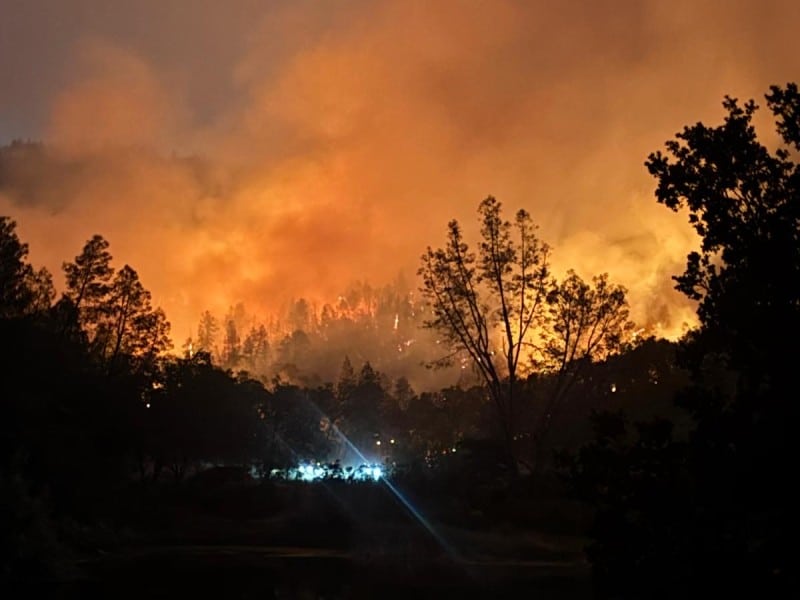
The Pickett Fire was nearly fully contained as of Tuesday morning after burning for more than a week in the hills east of Calistoga.
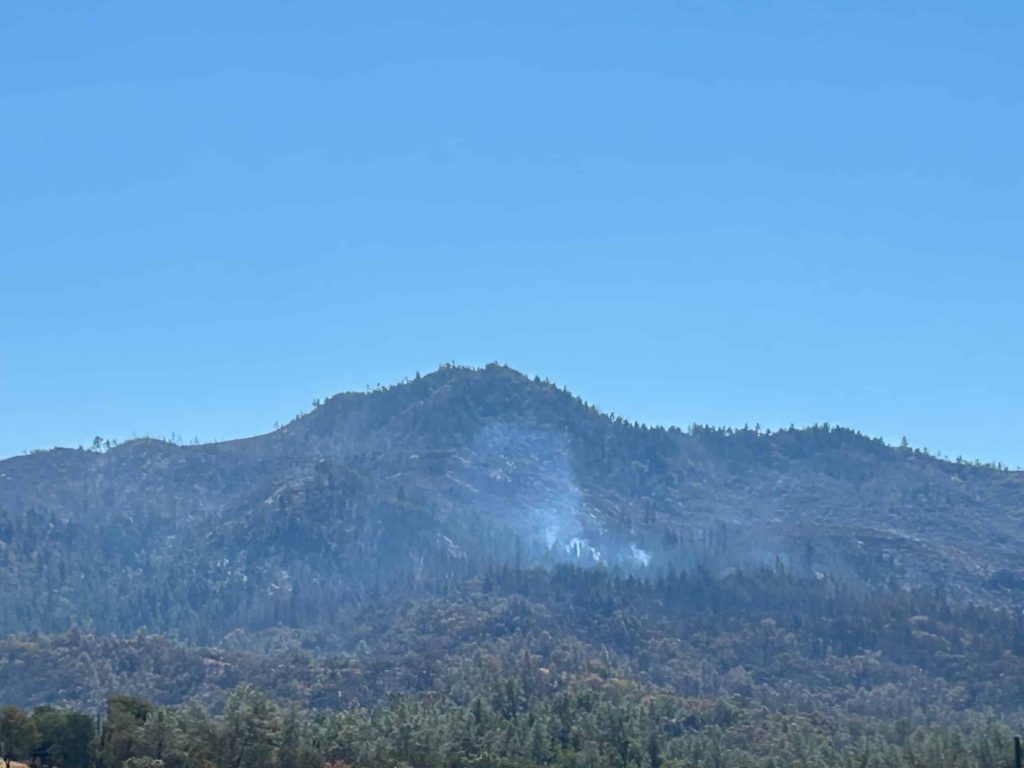
The fire, which burned 6,800 acres in the footprint of the 2020 Glass Fire in steep, rugged terrain, was 90 percent contained, according to Cal Fire. Cal Fire was expected leave its base camp at Napa Valley Expo on Tuesday as firefighters from throughout California, who had been assigned to the fire, head either home or to other incidents.
“Let’s go ahead and wrap this thing up,” Cal Fire Battalion Chief Robert Reynolds, one of the incident commanders assigned to the fire, said on Monday morning.
Reynolds was part of Incident Management Team 4, a team that brought firefighting resources from throughout California to the Napa Valley a few days after the fire broke just before 3 p.m. on Aug. 21 near vintner Jayson Woodbridge’s winery on Pickett Lane.
Woodbridge, owner of Hundred Acre Wines, acquired the former Kelly Fleming winery on Pickett Road in 2024.
The fire remains under investigation, according to Cal Fire. According to some reports, Cal Fire investigators have looked at discarded ashes left by a contractor.
“Hundred Acre vineyards is working cooperatively with fire investigators,” said Sam Singer, a spokesman for Woodbridge.
Incident Management Team 4 turned over management of the Pickett Fire on Tuesday morning to CalFire’s Sonoma-Lake-Napa Unit based in St. Helena.
About 1,000 firefighters remained assigned to the Pickett Fire as of Tuesday morning. At one point last week, as many as 2,800 firefighters were in Napa to fight the fire.
Cal Fire estimated on Sunday the preliminary cost of fighting the fire at $33 million, a figure that increases daily.
Preliminary agricultural losses were estimated at $65 million, Napa County Agricultural Commissioner Tracy Cleveland said last week. About 1,500 acres of vineyards – or 3 percent of the Napa Valley’s total production – have been affected.
Smoke exposure in a vineyard does not necessarily mean the wine produced from that fruit will develop smoke taint, scientists have said.
Growers whose vineyards have been exposed to fire have been advised to send fruit samples for chemical analysis, said Ben Montpetit, a professor in the Department of Viticulture and Enology at UC Davis.
Researchers collected grape and air samples during the fire “to improve atmospheric models of smoke plume behavior, refine risk assessments in vineyards, and advance detection and screening tools for growers and winemakers,” Montpetit said, adding that fruit sampling will continue once the fire is fully contained.
A number of institutions are involved, including UC Davis, USDA, and Oregon and Washington state universities.
Napa County has applied for a state grant under the California Disaster Assistance Act, according to Cal Fire.
It did so after the California Governor’s Office of Emergency Services last week rejected Cal Fire/Napa County Fire/Napa County Sheriff’s application for reimbursement under the federal Fire Management Assistance Grant Program.
Matt Ryan, chief of the Napa County Fire Department and chief of the Cal Fire Sonoma-Lake-Napa Unit, said the Pickett Fire did not meet the criteria for a federal grant in part due to the lack of threat to critical infrastructure. Five structures were reported lost, according to Cal Fire.
Cal Fire crews and contracted bulldozers have been cleaning up fire lines, including 32 miles of newly built lines along the perimeter of the fire. In addition, the crews have reopened fuel breaks.
On Tuesday, a watershed emergency response team made up of scientists in various disciplines including hydrology, is scheduled to start assessing the landscape of the Pickett Fire for any potential erosion or mudslides that could occur during the upcoming rainy season, according to Cal Fire.