NPR’s Mara Liasson brings D.C. perspective to Napa talk on local news
Calistogan Paul Knoblich wakes up stressed about the state of the world.
“I wake up at 3:30 in the morning and end up looking at Yahoo News. Then, I’m awake for another hour or two, and then I turn it off. What can I do? I contributed a lot to Act Blue. But what can I do?”
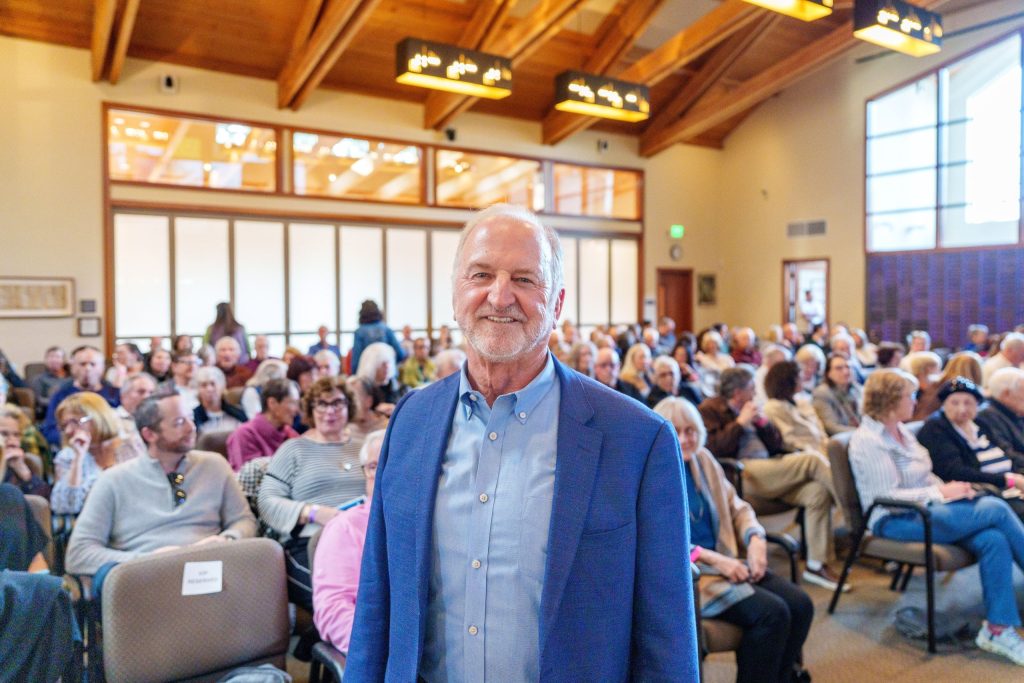
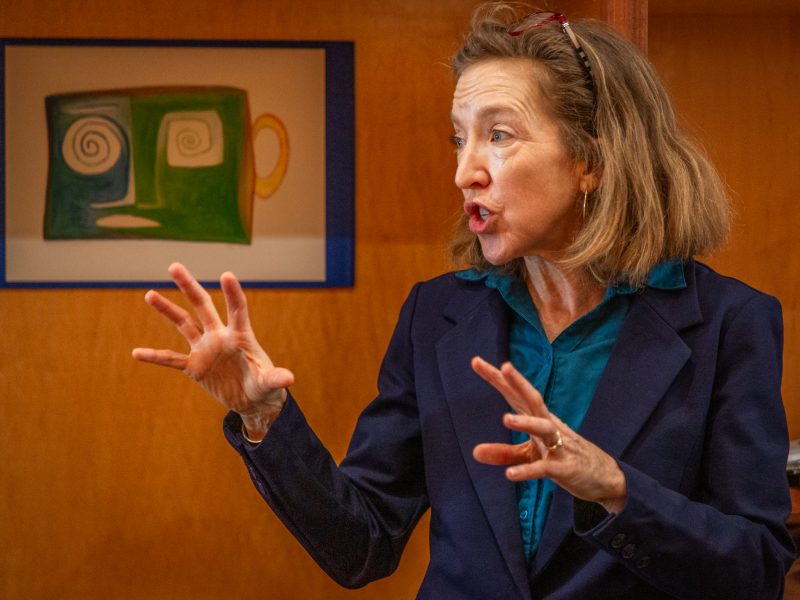
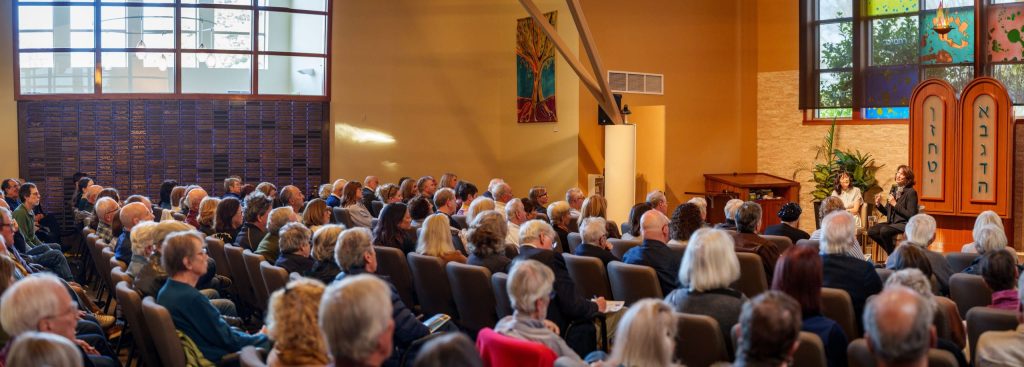
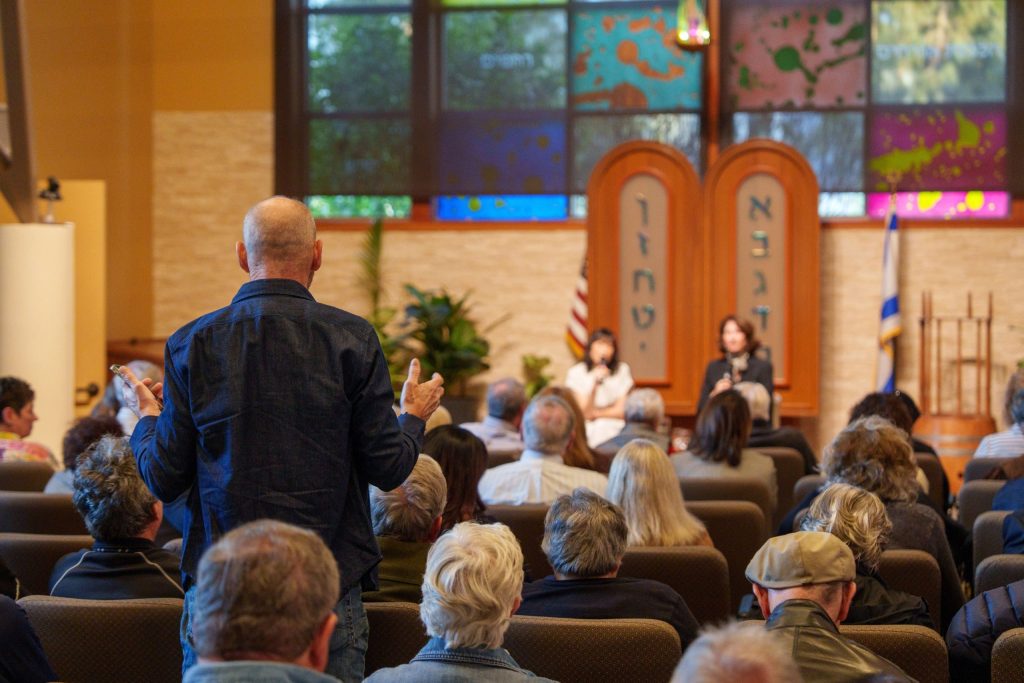
It’s a lonely feeling. But he’s not alone. On Sunday, Knoblich and nearly 200 others convened at Napa’s Congregation Beth Shalom for an hour-long talk with National Public Radio political correspondent Mara Liasson and KQED Forum host Mina Kim.
Both Liasson and Kim are veterans of live radio, with the effortless voices to prove it. Liasson, a D.C. resident, joined NPR in 1985; Kim started at KQED in 2007.
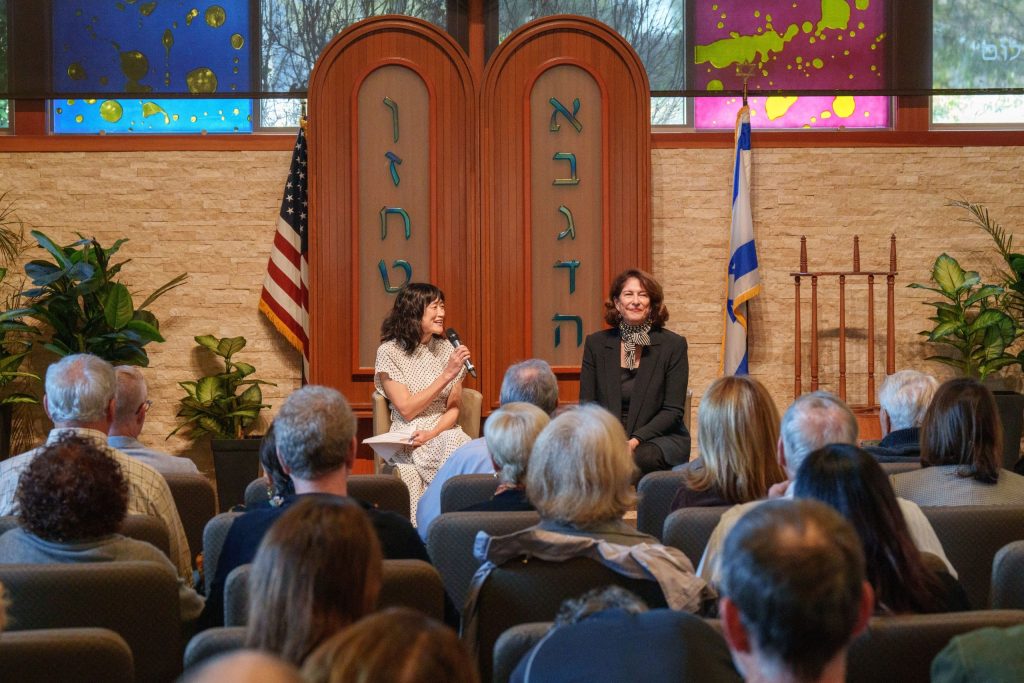
Liasson can be heard on NPR’s Morning Edition, All Things Considered and the NPR Politics Podcast. She describes her beat as “political climate change.” She has covered every presidential administration since Clinton. Like many reporters, Liasson got her start in local news at The Vineyard Gazette on Martha’s Vineyard.
Kim’s interviewing skills come from more than 10 years of hosting Forum, a live call-in radio show focused on the human experiences shaped by politics. A Napa resident, Kim commutes to San Francisco each morning, where she fields calls from dozens of Bay Area listeners.
The talk was a fundraiser for the Napa Valley News Group, a nonprofit initiative that publishes the Calistoga Tribune and the Yountville Sun, and the American Canyon Current, as well as Conéctate, a bilingual weekly newsletter and Napa County Times. All are paywall-free.
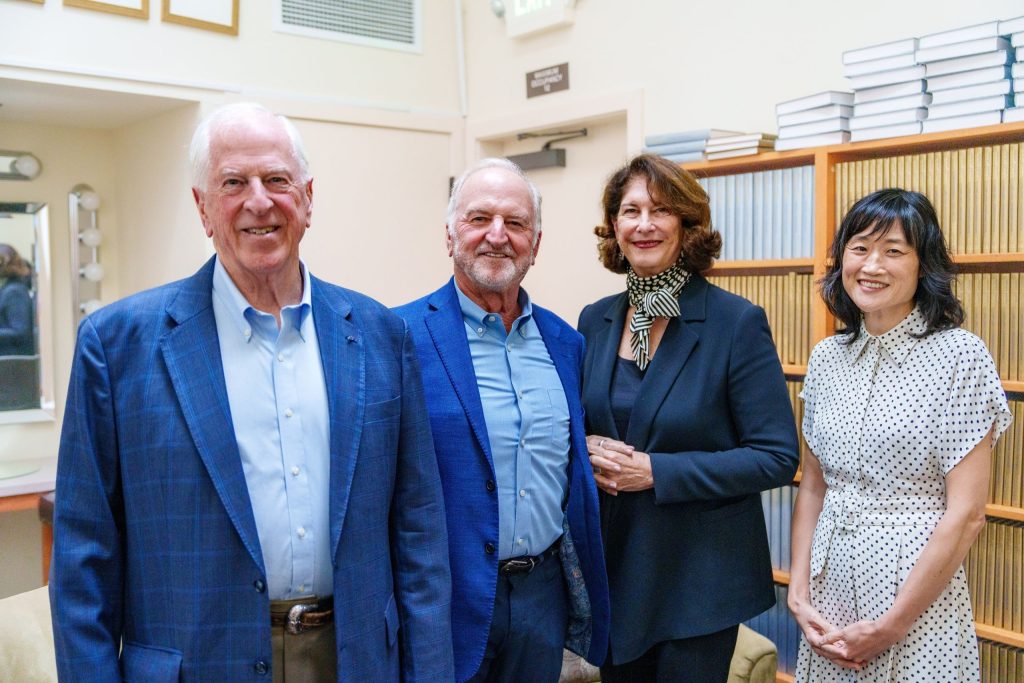
Rep. Mike Thompson, D-St. Helena, opening the event, said that he got his start in local media, too: His first job as a kid was delivering the Sacramento Bee, the Oakland Tribune and the News Call Bulletin in St. Helena. Local news is more important than ever before, he told the room.
“Whenever you lose access to news, to information, to free information, you run the risk of falling victim to rumors, or even worse — to lies. We lose access to information; we lose our freedom.”
Liasson’s and Kim’s discussion ran the gamut of political issues, from the end of NATO and the possibility of one-party rule to what individuals can do to protect the freedoms outlined in the Constitution, as well as the American dream, something, Liasson noted, many feel is becoming out of reach.
The message was consistent: Donald Trump’s presidency is reshaping politics at home and abroad. “Nothing is an unfathomable idea anymore,” Liasson told the audience. To make an impact, she said, it’s peoples’ responsibility to “be engaged citizens,” and she wondered aloud, “Will there be a resurgence of a kind of progressive reform movement in the United States that advocates basic things?”
Journalism has also changed, and covering Trump is radically different from reporting on past administrations.
“It’s very hard when the rules are changing or being destroyed. When you believe in certain values and rules, how do you adjust?” Liasson said the standards of objectivity have to be constantly re-evaluated. “That’s a similar problem facing all sorts of institutions, democratic institutions in American life, including Congress.”
The crucial practice of fact-checking is also in turmoil. “You have to fact check in real time. You can’t report what he said and then do a separate fact check.” She said it’s not clear how the old ways will come back.
“Democracy is about rules. And it depends on both sides accepting the rules. And the rules are being overturned.”
According to Liasson, both the Republican and Democratic parties had a hand in creating Trump.
“The Democratic party has become the party of college graduates. The Republican party has become the party of the working class.” The difference, she said, is that the Republican party has allowed its extreme, third-party edges to influence the larger party, while the Democratic party has shifted toward the center.
Liasson’s predictions? “We’re not going to have a big [blue] wave” during midterms in November.” She also anticipates that, world-wide, there will be “more countries with nukes.”
What’s she watching for? “Will Trump pull back [on immigration raids] or move on to naturalized citizens?” So far, she said, it’s hard to tell if Trump will react to public response, or if he will double down on arresting more and more protected groups.
Another question Liasson has: “Can Europe de-risk itself, separate from the United States, become less dependent on the U.S. financially for defense and become another superpower?”
Following the talk, in a Q&A, someone from the audience asked: “What makes you not depressed?” In response, Kim brought the conversation back to the people in front of her.
“This room — the engagement that people demonstrate on a regular basis … that gives me tremendous optimism.”
National issues are front-and-center in our news feeds every day, feeding that lingering feeling of, “What can I do?” One antidote, said Liasson, is “sticking together.”
Both Liasson and Kim extolled the importance of local news.
“We’re here because you believe in the future of local media,” Liasson said. “There’s two things happening in local media: One is things like Napa Valley News Group — all sorts of newspapers that are becoming nonprofits in order to survive.
“But then, week after week, [newspapers] are closing, dropping like flies. Local news can get stronger and stronger, and people have to demand it. If there’s an audience for it, it’s going to happen.”
“The more informed someone is locally, the better citizen they can be nationally,” said Liasson later. “It’s so easy to support local news. All you have to do is read it.” Even today, Liasson said she still reads the Vineyard Gazette that kicked off her career.
For many, the event itself was an antidote.
“It made me less anxious about what might be coming,” Knoblich, the Calistoga resident, said after the talk. “Mara’s attitude was: Whatever the people want, it’s going to be. Although I may not like what happens, we’ll probably be OK. That was a gift for me.”