Napa Valley grapes were left on the vine this harvest, while acres of vineyards have been pulled over the past year
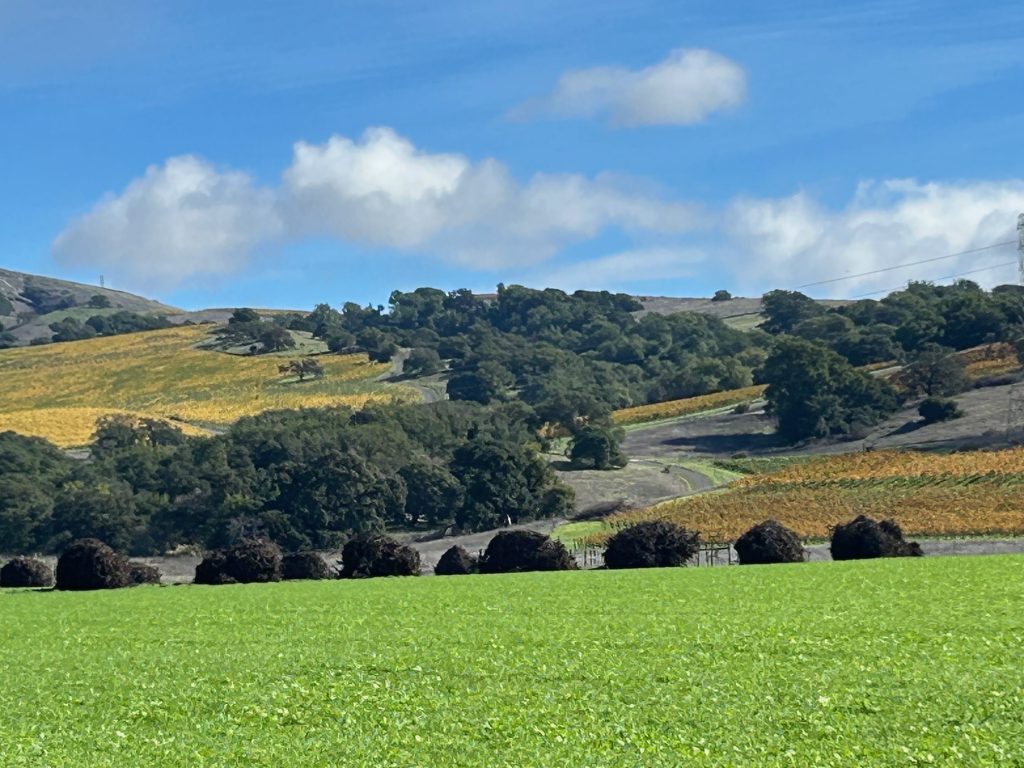
While the quality of the wine grapes harvested this fall was strong, the wine industry continues to struggle from fruit oversupply and wine overproduction.
About 8,000 acres – about 20 percent of Napa County’s vineyard acreage – went unharvested in 2025, estimated Jeff Bitter, president of Allied Grape Growers, a statewide winegrape marketing association with about 500 grower members.
Fruit was left unharvested throughout California. No winegrowing region was spared.
“It’s no surprise that it was a very difficult year for growers,” Bitter said at a virtual press conference organized by the California Association of Winegrape Growers. Industry analysts estimate the 2025 harvest could be under 2.5 million tons, the smallest in years.
Plenty of vineyards have been removed. As of August, Napa County had about 43,000 acres of vineyards. However, more than 3,100 acres have been removed between October 2024 and August, according to the California Association of Winegrape Growers.
Nonetheless, growers and winemakers reported strong fruit quality.
In Napa County, the growing season was cooler than recent years, with no major heat spikes. Harvest started on Aug. 1 and ended Nov. 2. Intermittent storms led to stops and starts during harvest.
“I really enjoyed this season because the phenolic ripeness was ahead of sugar accumulation,” said Ashton Leutner, director of viticulture at Continuum Estate. “Overall, I think we have really balanced wines coming out of 2025 at a lower alcohol content.”
However, concerns about market conditions remain.
In the Napa Valley, Maayan Koschitzky, partner and director of winemaking at Atelier Melka, and Nate Weis, general manager and senior winemaker at Beaulieu Vineyard, were among the panelists at an online harvest press conference with the Napa Valley Vintners and Napa Valley Grapegrowers. The video was released on Nov. 14.
“I think it’s evident, driving around the valley right now, that there is a lot of fruit left out there and that’s not region specific. It’s sort of everywhere,” Weis said.
There are many reasons why these grapes were not harvested, both said. The 2023 and 2024 vintages were heavy, Koschitzky noted. The situation has created opportunities to cherry pick fruit in the vineyard to elevate quality,” he noted.
Megan Gunderson, vice president of winemaking at Hall, also spoke at the press conference. Hall did not harvest all of its own fruit this year, she said, and contracted fruit did not meet the proper level of ripeness.
“We’re making sure that our inventory levels are appropriate and we also want to make the very best wine,” Gunderson said. “And so, where we harvested and where we didn’t was very influenced by quality as well.”
Leutner said Continuum was able to “be very selective about thinning this year.” There was not “massive pressure” to have as much fruit as possible. Continuum also conducted crop trials, said Leutner, who farms on Pritchard Hill.
Bitter reported that some growers and wineries are taking advantage of the downturn in the market to remove unproductive or poor-performing vineyards and replant them with new clone/rootstock combinations and alternative development styles.
Gunderson said Hall is redeveloping three of their vineyards. “It’s the time to do it,” Gunderson said.
Weis agreed. “It’s a great time to replant and redevelop.”
“We’ve seen cycles before, where times are tough,” Weis said. Times are tough for wineries and growers, he said, “but people like Hall are investing in the future already.”
Growers in other regions have felt the downturn in the wine industry more acutely than in the Napa Valley.
About 7,900 acres of vineyards have been removed in Lodi, according to various reports.
Aaron Lange, vice president of vineyard operations at Lange Twins Family Winery and Vineyards, anticipated another 8,000 acres of vineyards may be pulled over the next year. He estimated 15 to 20 percent of the fruit was unharvested in Lodi.
“2025 was easily the worst conditions for wine grapes in our area in my lifetime and likely for the career of my father as well,” Lange said during the CAWG press conference. “Growers are battered here with anxiety.”
Paso Robles-based Gregg Hibbits of Grapevine Capital Partners, estimated about 20 to 30 percent of Central Coast fruit will go unharvested this year.
The grape market has been “incredibly challenging” this year, Hibbits said.
Most wineries were not shopping for grapes during the growing season, Hibbits said. There was very little new business and growers sold fruit on the spot market at “incredibly distressed pricing,” he said.
More answers on the grape growing business are expected in January when Allied Grape Growers releases its annual nursery survey at Unified Wine and Grape Symposium in Sacramento. Unified is the United States’ biggest wine industry conference. The survey produces data on what varieties are being replanted and where.
“We will have all the newest information on Napa and Sonoma vineyard replanting for 2025 when we discuss the nursery survey at Unified Symposium in January,” Bitter said.
Fewer nurseries will be surveyed as some nurseries have shut down their winegrape vine sales operations since last year.
Bitter estimated a half-dozen commercial nurseries still sell winegrapes vines and will be surveyed. The survey used to include 11 companies in recent years.
Modesto-based Duarte Nursery Inc., considered one of the world’s largest crop nurseries, announced this fall it will stop selling vines at the end of 2025.