
Napa still struggling to balance impacts of tourism
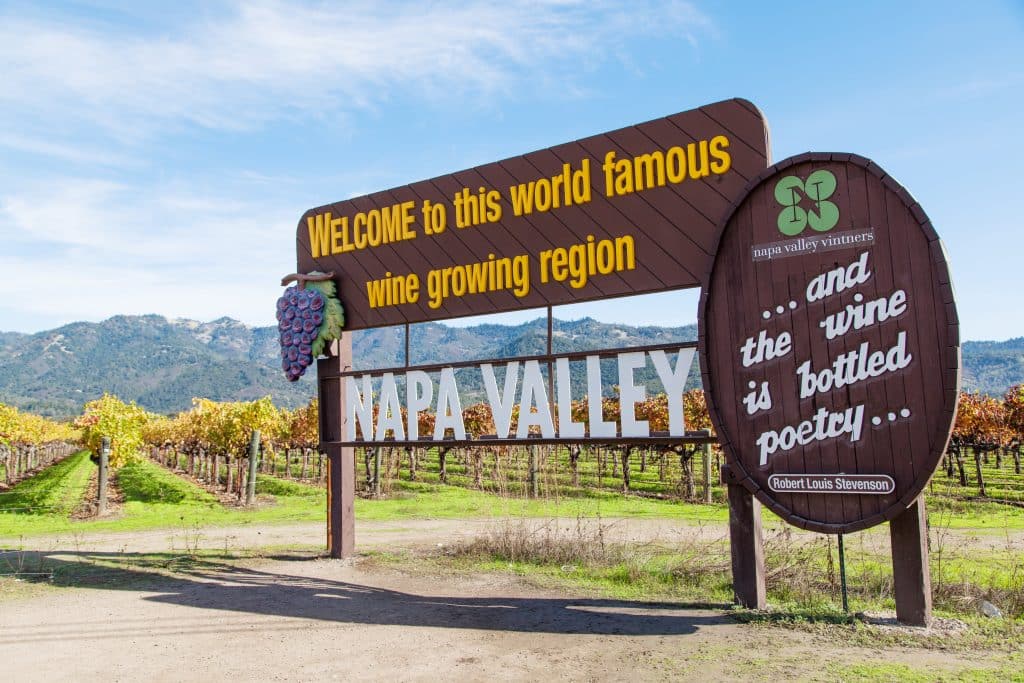
County receives 3.7 million visitors per year, which generates some $2.5 billion in revenue, and $107.5
million in tax revenue. Shutterstorck Photo.
It has been a strange year for tourism around the world. From Juneau to Venice, Barcelona to Bhutan, local inhabitants have taken to the streets to express concerns about the impacts of tourism on their local community.
And while Napa has yet to see a protest, there are plenty of grumblings about the impact tourism has on our community. The money tourism brings to Napa funds as much as 40% of the local government budgets, but is that enough to counteract the high costs of living, the traffic, and the loss of a real sense of community?
Clearly, Napa as a world-class tourist destination impacts our community in many ways. The most obvious positive ones are increased employment, economic benefits, tax revenues, and increased and enhanced lifestyle options for locals. Negative impacts are the cost of living, especially housing costs, and traffic. But the question for many Napans is whether we have that balance right, and what we can do about it. And few in the city or county government seem to be looking at the topic in those terms.
The economic benefits are well documented. According to the recently released 2023 study by Visit Napa Valley, the local agency in charge of promoting tourism in Napa, we receive 3.7 million visitors per year, which generates some $2.5 billion in revenue, and $107.5 million in tax revenue. Given the struggles of local government to pay for the services we currently receive, it is hard to imagine what Napa would be like without this money.
And it’s not just money. Again, according to that same survey, tourism generates over 16,000 jobs in Napa, and those jobs generate approximately $500 million in salaries. Few people in Napa can look at the street they live on and not identify at least one neighbor who is employed in tourism here. But those jobs are not particularly well paid. The Napa Valley Vintners Association prides itself on paying agricultural workers the highest wage for such workers in America – more than $40,000 per year. But based on the study from Visit Napa Valley, the average salary of a person working in the tourism and hospitality industry is far less than that, below $32,000 per year.
The Napa Valley Vintners has a Napa Neighbors program that offers discounts to local residents. The discounts, in most cases, are 10% off, or perhaps a two-for-one tasting. But when the average price of a bottle of Napa Cabernet is now more than $100, according to a Forbes magazine article, it’s a safe bet that few workers in Napa’s tourism business can afford even a single bottle, even with the 10% discount.
Natalia Guzman, a recent graduate of Napa Valley College’s Wine Program, lamented this recently when she explained that the students in the program can’t afford to buy or taste the wines from local wineries.
“It’s sad and frustrating,” she said, “I’d like to know more about these wines, and tell people about them, but as a student, there’s no way I can afford to try them.”
Guzman is working with local wineries to create a program for the students, but progress has been slow.
It’s not just the wines in Napa that have priced themselves out of reach of the local community. The median price of a single-family home in Napa is now nearly $1 million, and the prices continue to rise to meet demand.
“We are pricing ourselves out of existence,” said John Salmon, a local developer. “And locals can’t afford to buy what we’re selling.”
Some of that is a result of absentee owners, people who don’t live in Napa, but have a second home here that they use a few weeks of the year.
“In the Napa Yacht Club, where I live,” said Salmon, “I would guess that 25% of the houses are owned by absentee owners.”
“It’s even worse in Yountville and St. Helena,” said Chuck Shinnamon, who has brought this to the attention of local leaders. He is citing a housing study commissioned by Napa County Supervisors. In those two cities, the ratio is about 50%.
“Half the housing in those towns is not available for locals,” he said.
The study cites a mismatch between the larger, more expensive homes that continue to be built in Napa County and the need for more affordable housing for those working in the key sectors: agriculture, hospitality, healthcare and education.
“If the workers in those sectors cannot afford to live in Napa,” said Shinnamon, “then we begin to lose the sense of community. That’s huge.”
It’s not a problem unique to Napa. Tourist destinations around the world are struggling to come to grips with these issues. Venice now charges a fee for day-trippers to enter the city. Juneau, Alaska, Mallorca, Spain and other cities have announced limits to the number of cruise ships allowed to dock in their ports. And Amsterdam even went so far as to run an advertising campaign asking tourists to stay home. Tiny Bhutan charges every tourist $100 to enter the country – funds which are then used to mitigate the impacts those tourists have on the local community.
Protests in Spain received international news coverage this summer, with residents squirting tourists with water pistols in Barcelona and marching the streets in Valencia.
“We have to do something,” said Santos Morales of Sevilla. “The situation is insane. There is no room for locals to live.”
Morales lives on a small plaza near the cathedral. “When we moved here, 30 years ago, there were 14 houses and 14 families. Now eight of those houses are for tourists. We’ve lost something very important, our community.”
In the Balearic Islands, the situation has become a crisis.
“We have no housing for the people who need to live here,” said Pedro Amengual of Mallorca. “Twenty-five percent of our houses are owned by foreigners. In Ibiza it is so bad that schoolteachers are forced to live in tents on the beach, there is no housing for them.”
Being on an island seems to exacerbate the problem. In Galveston, the nearest communities off the island are 20 minutes away across a causeway – in an area beset by tropical storms. The city is currently considering raising the minimum wage for hospitality and tourism employees to over $20 an hour, a huge jump from Texas’ $7.25. The Canary Islands has similar problems, with housing costs being beyond the reach of those working in tourism.
Linsey Gallagher, executive director of Visit Napa Valley, recognizes the problem.
“The ability for our staff members to live in Napa, that’s a challenge,” she said. “Many of them are driving in from a long way away. But the hospitality industry is charging an additional 1% of Transient Occupancy Taxes (TOT) to support workforce housing, and that’s now up to $23 million that we are providing to local communities to help solve this problem.”
That may make a difference, but the amount of traffic into Napa each morning paints a different picture. Kate Miller, executive director of the Napa Valley Transportation Authority, has her doubts.
“It is not the tourists that are causing the traffic,” said Miller. “It’s the workers who serve these tourists that are causing the traffic. Local trips are up to 60,000 or 70,000 per day. And when you add in the more than 30,000 people who commute into Napa, it’s clear that while the jobs may be in Napa, many of the workers are coming in from Fairfield, Vallejo, American Canyon, and beyond.” (It should be noted that approximately 25,000 people commute out of Napa County to work as well.)
The NVTA is currently in the process of awarding the contract for the next traffic study. “We know that Bel Air Plaza [in the city of Napa] is the number one traffic generator,” said Miller, “and 50% of the trips by people in Napa are trips under five miles. A lot of those could be done by walking or biking or public transit. That would get cars off the road. But our highway infrastructure has made it easy to commute. We’ve gotten rid of our streetcars, and so many of our communities have been built around the automobile rather than pedestrians.”
Miller explained that making bigger highways is no longer an option.
“Highway capacity expansion doesn’t really work,” she said, “it just increases demand. And Caltrans can no longer fund that kind of growth. They are resisting simply increasing capacity. Roundabouts get approved because they also improve safety and allow bikes and pedestrians more safety. But they also increase traffic flow, without adding new lanes. That will make it easier for workers to get here, adding roundabouts, removing traffic lights, both in Napa and American Canyon. We’re also looking at the intersection of Highway 12 at Highway 29 with the same goal. We have lots and lots of projects for the future.”
Can tourism dollars fund this level of construction?
“Measure U will fund some of this, about $1.2 billion,” said Miller. “We are losing ground – construction costs are rising at 15% a year, bond rates are going up at 2% a year. And I want to point out that this money doesn’t go into the pockets of government, it goes to contractors who are doing the work. Without that, we have to piecemeal everything together. It’s much slower that way and it always costs more.”
The essence of the problem is simple. “We are not providing housing for our workers where they work,” Miller said. “That’s true all over California.”
Randy Gularte, a Realtor with 50 years of experience in Napa, weighed in. “Look, it’s simply law of supply and demand,” he said. “There is limited that land can be developed. Years ago, the Get a Grip on Growth movement really limited the housing units that could be built. Now it’s come back to bite us. You can see the same things in places like Carmel and Marin. But developers go where the money is. In Napa, that’s in single family homes.”
“The trend is that the lower paying jobs are held by people not living in Napa,” said Napa Councilwoman Beth Painter, who has 40 years of experience in land use and planning. “Even if you wanted to take public transportation, it’s not really an option. So yes, we are adding traffic to the roads. Restaurants, hospitality, wineries, retail, those are all low paying jobs.”
“We’re spending money on freeway exchanges, but we’re not creating the support systems for the people of this community.” said Cass Walker of the Gasser Foundation. “Seventy-five percent of city of Napa workers used to live in Napa – now those figures are reversed. It’s closer to 25%. Yes, there is money being spent on affordable housing, but without the rest of this infrastructure in place, we are just making things worse. Retired people can’t afford to move out of their homes into smaller houses, which means that many large homes are not available for families. That makes for an aging community – one that no longer has school age children. Our schools are shrinking, and our families are moving outside the area. Then they either commute here to work, or they work elsewhere.”
“What we need most in Napa is children,” admitted Napa Mayor Scott Sedgley. “It’s not possible to build our way out of that. A lot of our commuters are happy not to live here. And we don’t have the population density to justify public transit right now. Public transit just doesn’t address the workforce. I think we should look at making transit free. If we can get more mixed-use downtown that will help.”
The three key elements, jobs, housing and traffic, are all connected.

generate approximately $500 million in salaries. Shutterstock Photo.
“The biggest employers in Napa are tourism, wineries, health care, and schools,” said Jeri Hansen, executive director of the Napa Chamber of Commerce. “But the employees of those industries can’t afford to live here. Housing costs are too high. At the same time, there are lots of people who are driving out of Napa to work every day. Where are they going? Could we attract some of those businesses to Napa? How do we provide some of those high-income jobs here in Napa? We are building jobs at a fast rate, but only for people who live in Fairfield or Vallejo or Dixon. How is that helping Napa?”
Hansen pointed to a lack of information, and a lack of resources.
“The Napa Valley Economic Development Center disappeared in 2009, and the Small Business Development Center is now a shared office with Solano County,” she said. “The City of Napa has a development department, but they are mainly focused on helping new businesses navigate the local permitting system. They don’t really focus on attracting targeted businesses. We need to diversify our economy, but we don’t know what would work right now. The Chamber is studying this, and we hope to have some answers by spring of 2025.”
The task is a formidable one. Building housing for 30,000 commuters would overwhelm Napa, especially since so much of that housing would have to be affordable. And building affordable housing in Napa is a challenge. Finding jobs for the 25,000 that currently commute out of Napa might be just as difficult.
“There are a lot of impediments to trying to get anything done,” said John Salmon, listing them off. “Permitting is slow and expensive in Napa, and we don’t give anyone a break for affordable housing. Zoning is another. So many parts of the city simply aren’t zoned in a way that makes affordable housing possible, including large tracts of publicly owned property. I’ve tried. The fundamental costs to adding housing, even when I got land for free, simply didn’t pencil out. The costs won’t even let you come close to breaking even. The requirement that we provide a parking space for every bedroom…well, with housing in the urban center, maybe we don’t need so many parking places. People could walk or take transit. But that’s not in the regulations. We keep doing what we’ve always done, and it’s not working.”
Hansen agreed. “Right now, we would like to see more affordable housing built, but the city also requires every new construction to have a parking space for every bedroom,” she said. “If we could build housing downtown, some of the people wouldn’t need parking because they could work within walking distance. But everything is Napa is designed around cars.”
“The new general plan will allow higher density housing,” said Realtor Gularte, “We’ll get more condos and apartments built. And that will help soften the market. But I bet that 30% of the new owners in the Napa Pipe project are going to be second homeowners, and that won’t help a bit.”
There is a way forward, Salmon insists.
“Local government, city and county, working together to package grants and generate funding to help, but that would mean the bureaucracy would have to show some flexibility, a willingness to cooperate. And that means we need leadership – leadership that’s not afraid of innovation,” he said.
NVTA’s Miller thinks that public transit could help with the housing crisis, but some of it would be expensive.
“The railway line runs through Napa,” she said. “We would need to upgrade the sidings, grades and gauges to move it to light rail. And if it were privatized it would then [be used] for tourism. If public money pays for it all, there are real restrictions on how the money is used. We currently work with SMART (Sonoma Marin Area Rapid Transit), and they are working with the state to improve their connections in Novato to the Capitol corridor to connect with Sacramento and central California. That would certainly help the traffic in Jameson Canyon. We have a bus that operates through there, but it is a limited service now.”
There are other steps that could improve things as well, Miller noted.
“The city has put in a lot of sidewalks and on-street bike paths,” she said. “The new underpass at Highway 29 is a big step forward. Plus, we are now looking at a Class 4 bike lane, complete with a barrier between the bike lane and the cars, on Brown’s Valley Road.”
Richard Mendelson, author of Common Ground, a book on the future of the Napa Valley, suggests several ways to look at the problem, and the future.
“Winery growth and tastings rooms need to go into the southern part of the county,” he said. “Look at American Canyon – it is our only growing community, and it is ethnically diverse. Twenty percent of the voters in Napa County now live there, and it will become a political power. It’s an important part of the wine industry. And it’s within reason to see public transit there.”
Over in Europe, Jordi Valls, Barcelona’s deputy mayor, said the city needs more industry and technological innovation to offset tourism’s economic weight. It accounts for 14% of the city’s GDP and he said the government does not want that proportion to be much higher.
“We don’t want to be absolutely dependent,” he said of tourism. “We have to find a balance.”
In Napa, Mayor Sedgley noted the key role of tourism in the economy: “It’s a blessing to have tourism to create jobs here. If it weren’t for the hospitality industry and its revenue, we’d have a hard time providing services to our community, ones like fire protection, police, water, etc.”
The problems are not unique to Napa, as a recent story on CNN illustrated. It quoted Sebastian Zenker, a professor in tourism at Copenhagen Business School, as he discussed the steps cities in Europe are taking to address the issue. Amsterdam’s “Stay Away” ad campaign was mentioned, but so were other initiatives, each with concerns.
“If you increase prices and you attract more wealthy people, this solves the crowding effect, but at the same time it increases the inflation and the gentrification problem,” said Zenker.
And that, in turn, creates more housing problems.
“Affordable housing is one of the answers,” said Mendelson. “But where can it go? We have 180 beds for farmworkers, but that doesn’t even scratch the surface. We have 5,000 full-time farmworkers here.
“The Napa Valley Vintners Association has a subcommittee that does good work, but it’s a drop in the bucket. And that housing must be outside the Ag Preserve,” he continued. “You want it in the cities, not in ag land. But I think we really must survey our ag lands and see if there aren’t areas that couldn’t be developed for housing. Not all of it is perfect for ag. Some of our workers are now staying in garages. If I had to pick one thing, I would focus on that, without creating a burden on the area’s up valley.”
As for hospitality workers, Mendelson includes those issues in the discussion of farmworkers.
“I include the farmworkers with the hospitality workers,” he said. “I think hotels need to be required to build enough housing for all the employees they will attract to the area. Napa Pipe has a major affordable housing component, and that might help.”
Barcelona’s mayor estimates that there are some 10,000 short-term rental apartments in the city that are operating illegally. Gallagher of Visit Napa Valley suggests that the number might be as high as 800 in Napa. Putting those back into the long-term rental inventory would make a difference in rental prices.
Sedgley said he is aware of the issue.
“We have a third-party company that checks those, and it’s like playing whack-a-mole. We can’t keep up with what people are willing to do,” he said.
Amsterdam has now prohibited the construction of any new hotels. All new construction must include a plan for taking another hotel off the market.
“Mallorca is trying to limit sales of residential property,” said Amengual. “They could only be sold to local residents. But we’re running into issues with existing EU laws on that.”
Lisbon, Portugal, will no longer issue new licenses for short-term rentals.
“Each topic has so many layers,” said Napa Chamber of Commerce’s Hansen. “Take hotels. We are seeing fewer tourists, and they are spending more per person, but some locals are still angry about high hotel prices here. Should we reduce those prices? Wouldn’t that just increase visitor traffic? And it would reduce revenue. But if we build more hotels, we’ll need more employees. And that means more affordable housing, or more traffic.”
Sedgley agreed: “We don’t have that many hotel rooms to begin with. We have 5,500 hotel rooms right now. Sonoma has 8,300. And Monterey has 12,900. And we have very little in the pipeline. We’ve added 200 hotel rooms in the last five years. We’ve added two hotels since I’ve been here. Sure, there are projects on paper, but nobody has broken ground. And it is a slow process. That property over by the Oxbow has been in development for so many years.”
Hansen is sure the answer lies within the community, but she is unsure how to get there.
“I would like to be a convener, to bring people together to talk about these important issues,” she said, “but I’m afraid. I’m afraid of being attacked. I am afraid that public discourse in Napa won’t get past the yelling, each side digging in, and we won’t get anywhere. I don’t know exactly how we can start that conversation. But we need to do it.”
“Look, we’re a destination and our community is a part of the tourist experience,” said councilwoman Painter. “We want visitors to meet our local community and have great conversations. I hope that’s what people who visit find wonderful about visiting Napa.
She continued: “My cup is always half full. I think the future looks really good. I think we have to provide things that are exciting for everyone, including locals: better parks, recreational programs that are low cost or free, all of which should be exciting for locals.”
The question is, said Hansen, “What can we do right now? What levers can we pull to make a difference right now?”
“Thanks to the latest construction on the flood project, there is a big piece of property across from Walmart,” said Realtor Gularte. “I’d love to see someone do something with that. Maybe the Napa Vintners could use it for farmworker housing. We’ve built very little of that in the last few years. And we need it.
“But we really need new ideas, and better solutions,” he added. “I am not in favor of eliminating zoning, but why not let people convert commercial properties into residential? Commercial properties are having a lot of trouble right now. Why not take that Safeway downtown and develop it into both a residential project and grocery store? We always hear how we need more housing, but there’s always some reason why it can’t get done.”
Mendelson doesn’t see tourism or new residents as purely problematic.
“Newcomers aren’t the problem,” he said, “Newcomers who have no connection to Napa and no sense of community are another question. But as long as they’re involved in the community, they can be part of the solution. A lot of this really does come down to NIMBYs, because people don’t want affordable housing near them. It’s not just Napa, you are seeing this worldwide.”
How should we move forward?
Mendelson said that the process is as important as the ideas.
“If every stakeholder yells at the others, we’ll get nowhere,” he said. “The devil is in the details.”
Paul Wagner has taught wine marketing at Napa Valley College for 30 years, and frequently lectures around the world on wine and tourism. He is also the author of a popular series of murder mysteries.
Sponsored
Related Articles


Inaugural vintage for Larkmead’s head winemaker
Larkmead Vineyards in Napa Valley releases two 2021 wines under new winemaker Avery Heelan, showcasing the winery’s commitment to quality and innovation while maintaining organic certification and adapting to climate change.