
Grape virus threatens vineyards
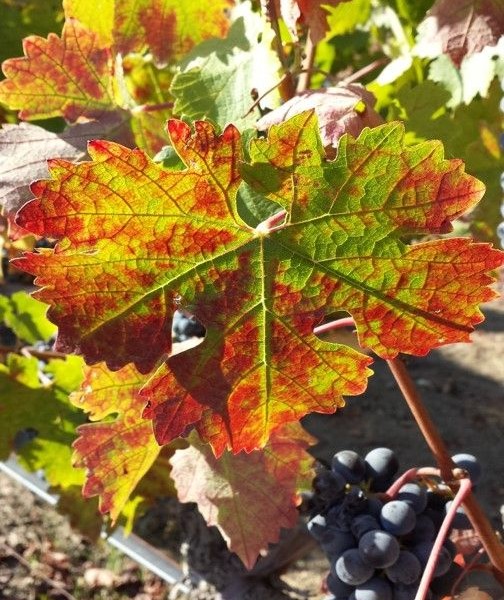
This week, Danielle Wilde and the Tribune broke a major story about the spread of a virus threatening vineyards throughout Napa Valley.
Tribune subscribers received an E-Edition with this story directly to their inbox yesterday. Below is the sneak peak at the full article.
To receive important articles about the larger Calistoga community each week, become a subscriber at the link below.
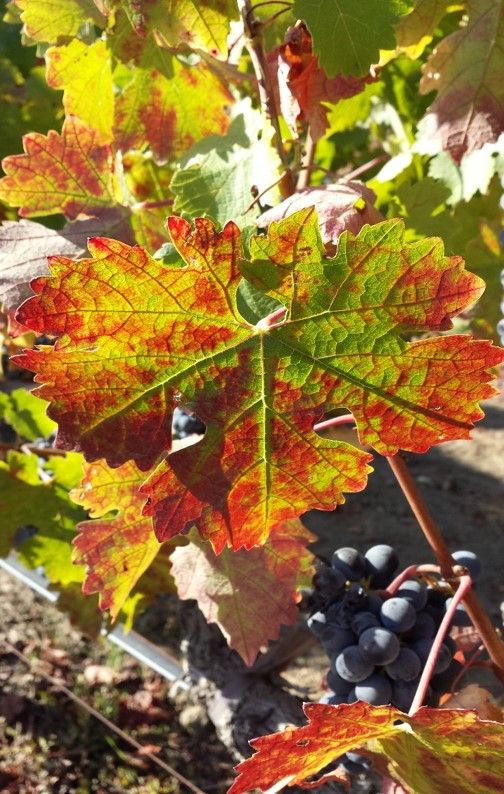
A destructive and mysterious infection known as the grapevine red blotch virus has spread across Napa Valley, leaving few vineyards free of its damages.
“It’s probably everywhere,” said Chris D’Alo, a viticulturist at Nord Vineyard Services who works with seven vineyards across Napa County and has confirmed cases of red blotch at each of the sites.
“It’s probably in most any block out there, including ours, and how to deal with it is very vexing as a grower,” he said.
The virus infects vines and slows the ripening process of the grapes. In red varietals, symptoms are usually first detected by red blotches on the leaves. Confirmation of an infection is done by a lab test.
Diseased vines generally produce grapes that have lower sugar concentration and less color on the fruit.
The virus poses a greater threat in red grapes than in white because it impacts alcohol level and tannins, qualities present at higher levels in red wines.
Grapes infected with red blotch can still be made into wine but could also diminish the quality of the product. Many wineries in Napa are tearing out the diseased vines to ensure no tainted grapes ever get to market.
While researchers believe there are multiple insects that have been transmitting the virus, to date only the three-cornered alfalfa treehopper is a confirmed vector of the disease. Little is understood about both the pest and the spread of red blotch within the vineyards.
“Red blotch is kind of a mystery,” said D’Alo.
There are more than 70 recorded viruses worldwide that impact grapevine vitality. Because red blotch has symptoms similar to other common grapevine diseases and nutrient deficiencies, researchers believe it went unnoticed for some time before it was identified as a new virus in 2012. Since then, its advance is at the forefront of many grape growers’ minds as they work in tandem with viticultural researchers to try to understand and mitigate disease outbreaks.
In 2019, the USDA approved funding for a grant to identify red blotch vectors and to study the impacts of the disease. The grant’s program director, UC Davis enologist Anita Oberholster, said that currently a focus of the study is the behavior of the three-cornered alfalfa treehopper.
“Somebody who thinks they might have red blotch and wants to try to contain it, needs to set up traps,” she said. “But if you put the traps out at the wrong time, you’re not going to see anything and you’re going to think you have nothing.
“It’s not as simple as identifying a vector,” Oberholster said. “You need to understand the biology of that vector, and its life cycle.”
Research shows that the treehopper isn’t particularly efficient at spreading the virus and does not prefer to feed on grapevines, but rather on alfalfa and other legumes. One problem is that the insects have been successful at eluding vineyard traps, thus hindering studies.
Oberholster said the best way to prevent spread in a vineyard is to tear out the sick vines when they begin to show disease symptoms.
“Obviously, to replant vines is expensive,” she said. “It’s not something everyone can do.”
Vineyard consultant Garrett Buckland of Premiere Viticultural Services, who oversees several thousand acres of vineyards across Napa and Sonoma counties, estimated that he is actively mitigating the disease in 30 percent of the property he helps manage.
“Where I don’t have a whole block that’s infected, I’m trying to keep it out as much as possible,” he said. “In that case, there’s zero vineyards where I’m not thinking about this or managing it somehow.”
While vineyard consultants like Buckland and D’Alo work in the vineyards to stop treehoppers from spreading the virus, ripping out vines and creating physical vegetation barriers to dissuade the vector, researchers are slowly making headway.
The USDA study is slated to wrap up next year. Oberholster said her team has only “scratched the surface” and still has a lot of work to do understanding how the virus moves through the vineyards.
Sponsored
Author