Debate heats up as Napa County crafts rules for vineyard tastings under new state law
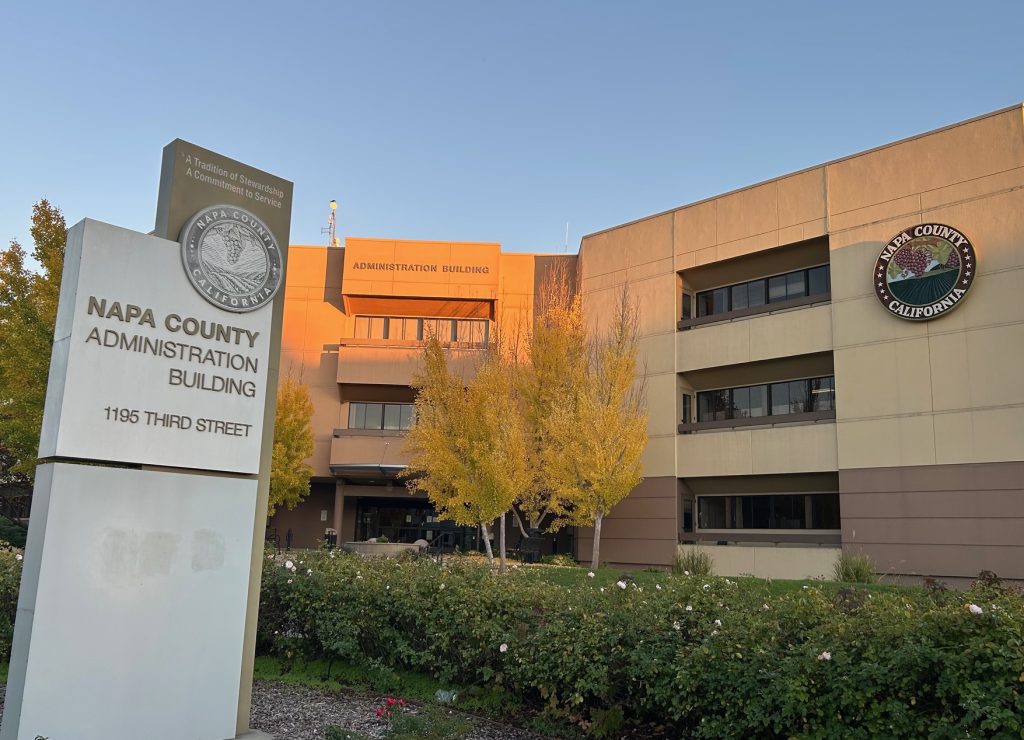
Napa County officials are developing ideas on how to implement a new California law to allow wine grape growers to offer wine tastings on their estate vineyards.
The state bill, AB720, which becomes effective Jan. 1, allows vineyard owners licensed to sell alcohol to host wine tastings on their properties, in an effort to boost the wine industry.
Under the legislation by Assemblyman Chris Rogers, D-Santa Rosa, which Gov. Gavin Newsom signed on Oct. 10, wine grape growers can host up to 36 tastings a year once they obtain a license from the California Department of Alcoholic Beverage.
Napa County’s board of supervisors and county officials on Nov. 18 discussed how to implement the law in Napa County. County staff and Napa County Fire spoke about the need to control the number of vehicles in the vineyards, out of safety concerns.
Applicants seeking to host wine tastings need fire marshal’s approval, Napa County Counsel Sheryl Bratton told the supervisors.
Supervisor Alessio urged Napa County to move forward to implement the new law. Supervisor Belia Ramos said she would like to have these rules in place by Jan. 1.
Napa County Fire Marshal Jason Downs said in November the intent was to listen to the public’s comments and to see how the law could be tweaked into a “something that works.” The goal was set in place guardrails while not being “over-restrictive.”
Napa County’s road and street standards are based on state regulations, Downs said. Historically, Napa County has said that wineries, even micro wineries, require commercial access roads, he said.
County staff also proposed limiting the number of visitors to 15 and requiring buses to shuttle visitors to vineyards.
Supporters of the new law, including Peter Rumble, CEO of Napa County Farm Bureau, said it was designed to be a lifeline for small producer and simple to use. He and others questioned proposed restrictions, including limiting the number of visitors to 15 and requiring shuttles to bring visitors to the vineyards.
Elise Nerlove, of Elkhorn Peak, also spoke against the 15-person limit and the bus shuttle requirement. Shuttles are too expensive and unnecessary, Nerlove and others said.
Donna Walker, owners of Pulido-Walker, said they do not want to have mass busses riding through vineyards.
“We own these vineyards we’re talking about; we are going to protect them,” Walker said.
Michelle Novi, counsel for Napa Valley Vintners, spoke in favor of AB720 and praised county staff for trying to find a solution.
Staff’s report is rooted in pragmatism, Novi said. It limits the number of people and the number of cars. At the same time, Novi urged the board to approve a pilot program.
“Let’s talk about how we satisfy safety concerns, but let’s get this done,” Novi said.
Like other speakers, Novi noted the challenges facing the wine industry.
AB720 is about “guided visits to the vineyards, conversations about soil, canopy management or generative agriculture, all connecting what’s in the glass to where it came from.
“And these connections that our guests will be able to make matter more than ever,” Novi said. “When consumers understand the land, the work, the stewardship, they’re better able to value the product, but they’re also better able to value the place and what makes Napa so incredibly special.”
Alessio questioned why Napa County, unlike Sonoma County, would impose restrictions in order to implement the new law. Requiring shuttles is burdensome on small businesses, she said.
Supervisor Amber Manfree spoke in favor of county staff’s proposed rules. There may be thousands of vineyards without a winery on them, she noted.
Sonoma County, unlike Napa County, is spread out, Manfree said. Napa County also has proportionally “a really large amount of acreage” in “high and very high fire hazard severity zones.”
Manfree spoke of the fire risks in outlying areas due to new uses of the land. In 2017, Napa county lost 800 structures, Manfree reminded the audience, adding she stands behind the road and street standards in Napa County in order to ensure firefighters can safely fight fires. These rules were adopted because there is dramatically increased fire risks as climate changes rapidly, Manfree said.
The implementation of AB720 might be discussed again later this month to have the rules in place by Jan. 1.