Acanthus, an old-world plant thrives in modern California gardens
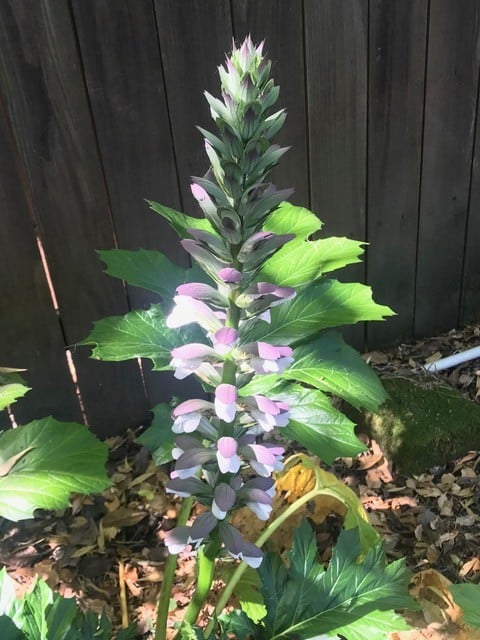
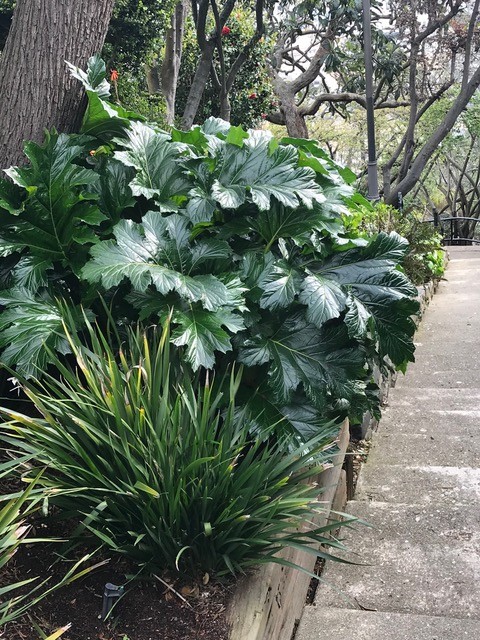
Acanthus is one of my favorite plants. Right now, when my yard is mostly dormant, except for camellias and wild onions, it is a pleasure to see the acanthus unfurling its shiny dark green leaves.
I see acanthus all over my neighborhood. It is an easy-care plant, and it is a wonderful accent for a streetscape because it is tall and elegant and makes a good backdrop for less statuesque plantings. It complements Victorian style houses but is just as effective next to a midcentury modern home.
Acanthus originated in the Mediterranean area of Europe. Sometime around the 5thcentury, a Greek stone carver got the idea to use the acanthus leaf shape to decorate the tops of architectural columns. We can see those today at the U.S. Capitol in Washington, D.C., the Palace of Fine Arts in San Francisco, and in our own town of Napa, inside Churchill Manor. (Those columns are carved of redwood.) Architectural columns are a way to imply dignity and seriousness of purpose to whatever is happening inside the building, but I think the acanthus leaves add liveliness to the design.
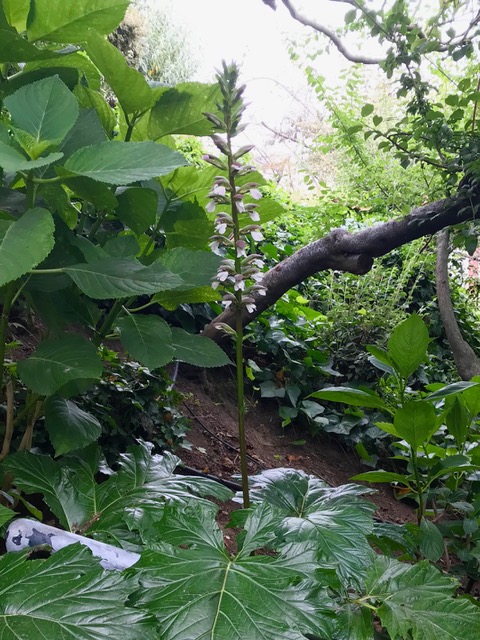
Acanthus has large ruffly leaves. One variant has leaves with thin spikes. The word “acanthus” means prickly, but the variant I have (Acanthus mollis var. latifolius) only has barbs beneath the bracts of its flowers.
It is pollinated by bumblebees, which fit inside the flower and push apart the sepals to reach the nectar. The flower is lavender and white and shaped rather like a foxglove. Unlike the foxglove, the acanthus is not poisonous.
My acanthus plants spread four feet wide and stand four feet tall, with the flowers that appear later in the summer growing six feet tall. They are impressive. I keep them confined in a bed edged with concrete; otherwise, they would take over my yard.
In areas with hot summers, acanthus appreciates some shade. It grows on the exposed hillside of Ina Coolbrith Park on Russian Hill in San Francisco, but of course it is often foggy there. In my yard, the plants get morning sun from the east and afternoon shade from a walnut tree. They don’t need any water except during the hottest part of summer.
I have read that slugs and snails like to feast on acanthus, but I have never had that trouble in my yard, perhaps because the slugs were too busy chewing on the Brugmansia. If you are bothered by slugs and use slug bait, keep pets away from it.
Acanthus plants grow in clumps. You can propagate them by splitting a clump in fall or spring and then cutting off three-inch chunks of rootstock with leaves. Place those in a soil-less potting mix and keep them watered. When they grow roots, you can plant them.
If you collect the seeds, soak them in water for 24 hours, place them in potting mix and keep them at 55 degrees F. They will sprout in about three weeks, and seedlings will take at least two years to reach flowering size.
If you don’t want the seeds, cut the flowers back before the seed capsules form. If the seed capsules mature, they will pop open and send seeds out into the world to sprout. And because acanthus can propagate from root sections, they are hard to eradicate if they do spread. You will have to dig the plant out, and it might return for a few seasons. Do not rototill where you have planted acanthus as that just spreads root pieces, which will sprout.
At the end of summer, when the leaves and flowers are faded and brown, I cut them back. In a couple of months, encouraged by winter rain, they return, gloriously green and vigorous.
My plants are heavily mulched, which protects the roots if it gets unusually cold in winter. In early spring I apply a balanced organic fertilizer. Acanthus grows well in poor soil but doesn’t mind a dose of compost now and then.
One of my friends had a showplace Victorian, and she replaced her acanthus in front with hydrangeas. I wondered why. Hydrangeas need so much more water. Maybe she did so because, in California, easy-grow acanthus doesn’t get much respect. There’s a lot to like in a plant that is beautiful and doesn’t demand much care—or water.
Library Talk: Join UC Master Gardeners of Napa County and Napa County Library for a free talk on “Healthy Soil = Healthy Plants” on Thursday, March 5, from 7 to 8 p.m. via Zoom. Are your plant problems due to the health of your soil? Learn about potential problems and possible solutions for improving your soil. Register here to get the Zoom link.
Help Desk: The Master Gardener Help Desk is available to answer your garden questions. Use our online Plant Problem Help Form or email us at [email protected]. Include your name, address, phone number and a brief description of the problem. You can also visit us in person on Mondays and Fridays from 10 am until 1 pm at the UC Cooperative Extension Office, 1710 Soscol Ave., Suite 4, Napa.