A pollinator garden lesson, learned the hard way
February is a good month for planning everything and planting some things. When I review my gardening calendar/journal, I grin. There is a yawning chasm between the plans and the accomplishments.
But I have success in one thing: I have an excellent pollinator garden with lots of California native plants, as well as a few immigrants from the eastern United States. At this point, I count our Mediterranean favorite, lavender, as a shirttail-cousin native since it does so well here.
In fact, my monardas were so healthy that some expired from crowding. My dilatory pruning is to blame, but this year will be different!
After looking through my photo roll from 2020, I saw that my plantings had elbow room then. I was spending a lot of time at home, and my garden benefited. So did I. My yard kept me from getting depressed about Covid.
Aside from my determined cheerfulness getting on my family’s nerves, it was a good situation. And my family was at such loose ends, they helped me. That will never happen again unless I live long enough for my grandson to use the miniature gardening tools that were among his baby presents.
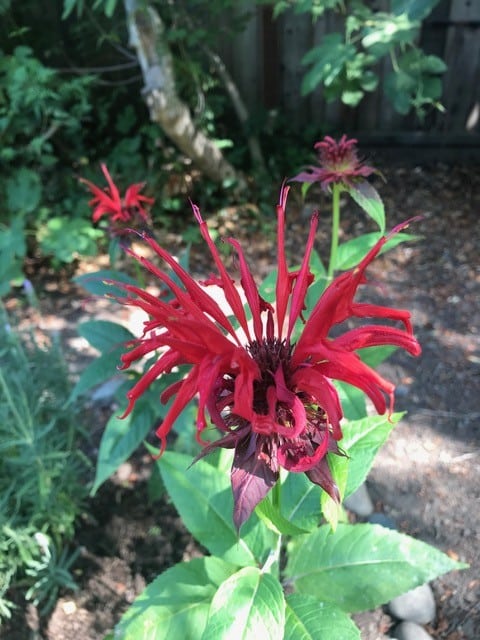
A beautiful stand of ruby red Jacob Kline monarda was one of the pollinators that disappeared, and I know why. It grew to a size and density that attracted mildew. Farewell, Monarda didyma. It was a striking four-foot-tall plant with blue-green leaves, adorned with an Art Nouveau-looking flower—actually, a cluster of tube-like flowers—that evolved into a festive, aster-like blossom. It was covered with bees all day long. In a word, stunning. I had two patches of them, and the bees and hummingbirds zigzagged back and forth all day long.
I didn’t know what monarda was when I received three as a gift from an old friend. That’s because I knew the plant by its East Coast name: bee balm. This lovely North American native grows all over the East Coast where it is also known as Oswego tea, horsemin and Appalachian balm.
According to the University of Pennsylvania’s Morris Garden blog, monarda was named after a Spanish physician and botanist. Nicolas Monardes never traveled to the New World, but he did obtain stories and seeds from ships’ crews that had been there, and he wrote the first book about American flora. That was in the 16th century.
Two hundred years later, Linnaeus named the plant after him. Monardes was interested in medicinal use for the new plants, and the native tribes made an infusion from Monarda that they used as a tooth rinse.
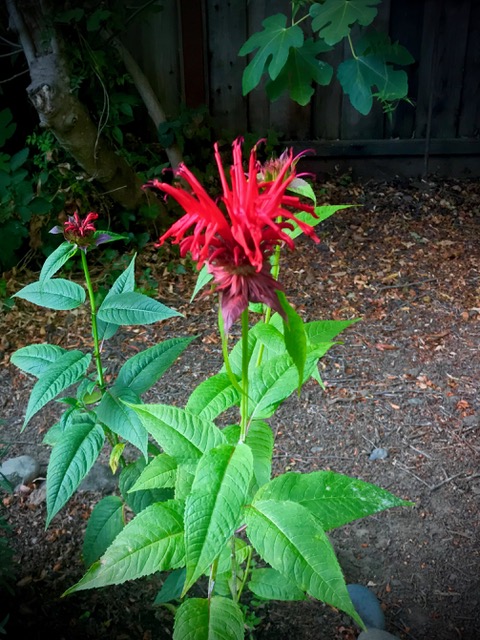
Monarda belongs to the Lamiaceae (mint) family, and its leaves have a minty odor. It has square stems (like mint) and paired leaves and stamens, which explains the botanical name, Monarda didyma. Its flower colors range from pale lavender to crimson.
This plant likes some sun, but it doesn’t flourish in extremely hot climates. Napa Valley is ideal. Monarda likes our mild winters and can tolerate our warmest summer days if it gets some shade during the hottest part of the day
Monardas do need a little water in hot weather. In the Eastern states, they don’t typically need irrigation because it rains in summer. Make sure your soil is well drained. Monardas are a good choice in rural gardens because deer are not attracted to them. They generally bloom from June through August.
Monarda spreads by both seeds and rhizomes. After the flower head turns brown at the end of summer, you can open it up and remove the seeds or let it self-sow.
Monarda is a clumping plant. You can break up the clump into smaller plants with rhizomes attached. By reducing its density, you will keep the monarda healthier and free of mildew.
If you are interested in creating your own pollinator garden, visit the UC Master Gardeners of Napa County website and search for Napa County Pollinator Garden Las Flores Learning Garden. You will find a list of suitable plants, including bee balm Coral Reef and bee balm Marian Sampson. These happen to be California natives. Coral Reef attracts hummingbirds, bird, and butterflies, and Marian Sampson attracts hummingbirds. The Las Flores Learning Garden is at 4300 Linda Vista Ave. in Napa. It’s inspirational and well worth a visit.
Library Talk: Join UC Master Gardeners of Napa County and Napa County Library for a free talk on “Healthy Soil = Healthy Plants” on Thursday, March 5, from 7 to 8 p.m. via Zoom. Are your plant problems due to the health of your soil? Learn about potential problems and possible solutions for improving your soil. Register here to get the Zoom link.
Help Desk: The Master Gardener Help Desk is available to answer your garden questions. Use our online Plant Problem Help Form or email us at [email protected]. Include your name, address, phone number and a brief description of the problem. You can also visit us in person on Mondays and Fridays from 10 a.m. until 1 p.m. at the UC Cooperative Extension Office, 1710 Soscol Ave., Suite 4, Napa.