Calistoga Library launches new initiatives to reach Spanish speakers
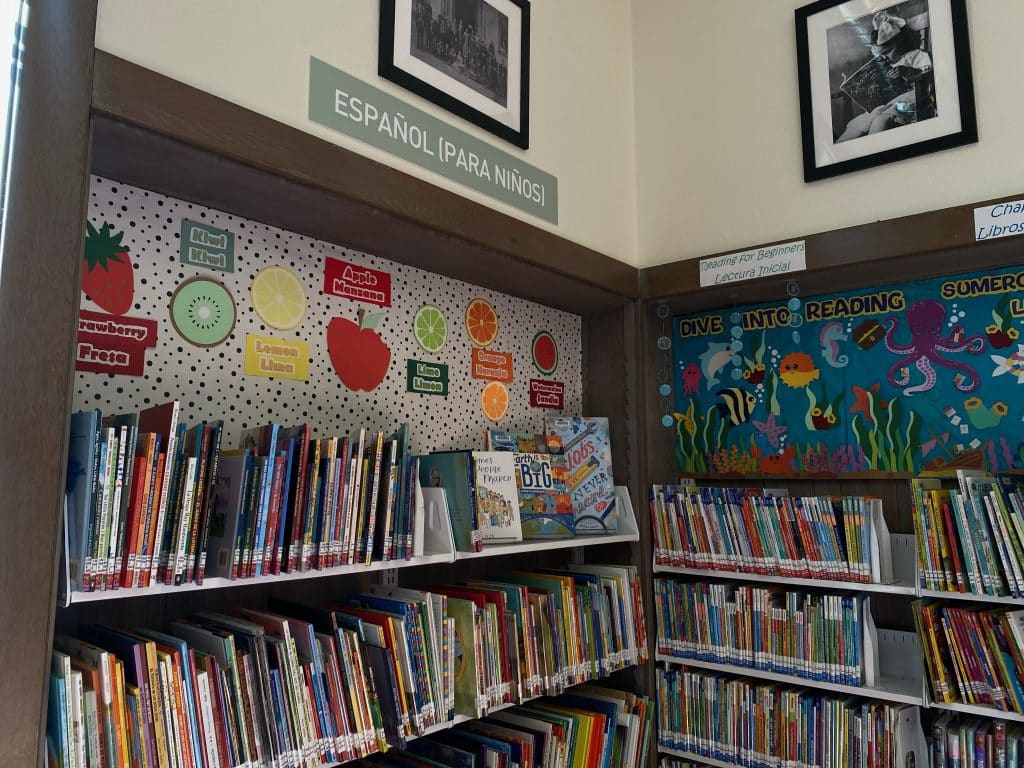
Jesica Martinez grew up visiting the Calistoga Library with her parents to check out books and DVDs. Now a mother of three, she continues the tradition with her own children, regularly attending story time and making use of the library’s services. For Martinez, like many others in the community, the Calistoga Library is a welcoming space for Spanish speakers.
Still, the library aims to reach those who aren’t yet aware of its resources or who have never visited. At the same time, library staff are eager to learn more about what the Spanish-speaking community wants in terms of programming and content. To foster this connection, the library is creating opportunities for community collaboration through conversations and discussions.
According to the Data USA website, 44.9% of Calistoga’s population is Latino or Hispanic. While there are no specific data on how many households primarily speak Spanish, more than 34% of students in the school district are English language learners. A national study on librarian job postings requiring Spanish fluency found underrepresentation, highlighting the importance of hiring Spanish-speaking librarians for effective outreach.
“We saw an opportunity for Calistoga to expand its services,” said Anthony Halstead, director of the Napa County Library, who has worked in the system for more than 16 years. “In Calistoga, bilingualism – specifically in English and Spanish – is a requirement when we hire, because of the community’s high percentage of Spanish speakers.”
To expand its outreach, the library received a grant through the Library Services and Technology Act (LSTA), the only federal program dedicated solely to funding libraries. The grant allowed the library to hire a full-time staff member dedicated to outreach and community engagement.
That staff member is Jacqueline Flores, who has been with the library for eight years and recently took on the role of Spanish services librarian. She’s the first in recent years to hold the title with a formal background in library science, thanks to the grant funding.
“The ability of a librarian to do outreach, create programming and connect with community partners is something other staff can’t do as easily because their roles focus on direct patron service,” Halstead said. “Her position allows her to work more closely with schools and local organizations to bring new services to the community.”
Beyond hiring Flores, the library’s goal is to better understand what the community wants – what types of books people are seeking, which events interest them and how to reach residents who don’t currently use the library. So far, they’ve hosted one community conversation in March and plan to distribute public surveys. Still, Halstead emphasized that in-person dialogue is the most valuable.
“So, we actually went on foot and talked to people,” Flores said. “We were looking for just 10 participants, and we literally walked around town for three hours.”
That first conversation included only women, which Flores noted is common in libraries, as mothers are typically the ones bringing children to programs. Despite the small, female-only group, she gathered valuable insights.
Martinez believes the predominance of women in these conversations might be cultural – fathers are often at work, while mothers have more flexibility to visit the library. Library staff have noted that many women seek child-friendly events and resources they can enjoy with their kids.
One mother requested a class on building confidence, expressing discomfort with speaking up in English, especially in school meetings. Others asked for self-help and meditation books. “That really stuck with me,” Flores said. “I want to figure out how we can help, because I don’t want their voices to go unheard.”
Many participants expressed a desire for programs where they could gather and talk – perhaps something casual like a “coffee and chisme” hour. Others requested activities for their children or family-oriented events.
Claudia Anaya, a regular library user who attended the discussion, learned about the event from the blackboard near the entrance. She has visited the library since before becoming a mother, initially to use computers or print documents. However, she was surprised to learn she could check out items like a sewing machine. Anaya suggested the library be open on Sundays, even for a few hours, and offer workshops on nutrition or support for parents of children with special needs.
Anaya has seen an increase in Spanish-language materials over the years. In one case, she requested a book on bullying for her child, and the library ordered it for her at no cost. “I’ll definitely attend another conversation,” she said. “Because I believe change comes from talking.”
Martinez echoed that sentiment, noting how much the library has improved since her childhood. “There have been so many upgrades,” she said. But she also believes some people may feel intimidated by language barriers. “If you’re not fluent in English, it can be intimidating to ask questions,” she explained.
She tries to spread the word to other parents about library events and services. “I always tell other moms, ‘Hey, they have story time,’ or, ‘Did you know you can do this or that?’”
Both Martinez and Anaya suggested that partnering with schools could help increase awareness. Martinez also expressed interest in music or sign language classes and uses the Libby app for audiobooks.
Other recent efforts to bring people to the library include launching English conversation practice sessions with staff and creating a Spanish-language book club called Círculo de Libros.
However, reaching non-library users remains a challenge. Halstead explained that people who didn’t grow up using the library – especially recent immigrants – may not realize what it offers. “That’s why it’s our job to educate them,” he said.
Flores added that fear or distrust of public institutions may also be a barrier. “That fear has always been there, and right now it’s even more heightened,” she said.
Misconceptions about library services also persist. Some people mistakenly believe there’s a fee for library cards or that they need a U.S. ID. Flores said she makes it a point to clarify these things. Halstead noted that even language can be confusing – “library” in English translates to biblioteca in Spanish, while librería means bookstore, which can lead to misunderstanding.
The next community conversation is scheduled for May 30. The library will promote it in partnership with local schools and on social media, and will release a survey for those unable to attend. The main priority remains: reaching those who don’t yet use the library.